Japanese stab binding
Welcome to our Japanese stab binding page to accompany our notebook making kit that has been designed exclusively for Cosy Craft Club by Calamity Katie Designs! You'll find our video demonstration, tips and inspriation. Enjoy!
What is Japanese stab binding?
Japanese stab binding is a traditional bookbinding technique where single sheets of paper are stitched together at one end to create a book. It's a great starting point for someone who wants to try bookbinding, due to its simplicity.
The spine stitching is visible in stab binding, and many different designs can be used. Not only does it look beautiful, but it's a great way to collate artwork, photos, memorabila and more into long lasting books.
While Japanese stab binding is the most popular form, stab binding originates from a range of Asian countries. Each country has a preference for the number of holes that the stitch pattern is based around - Japanese uses 4, while Korean uses 5, for example.
My experience with this kit
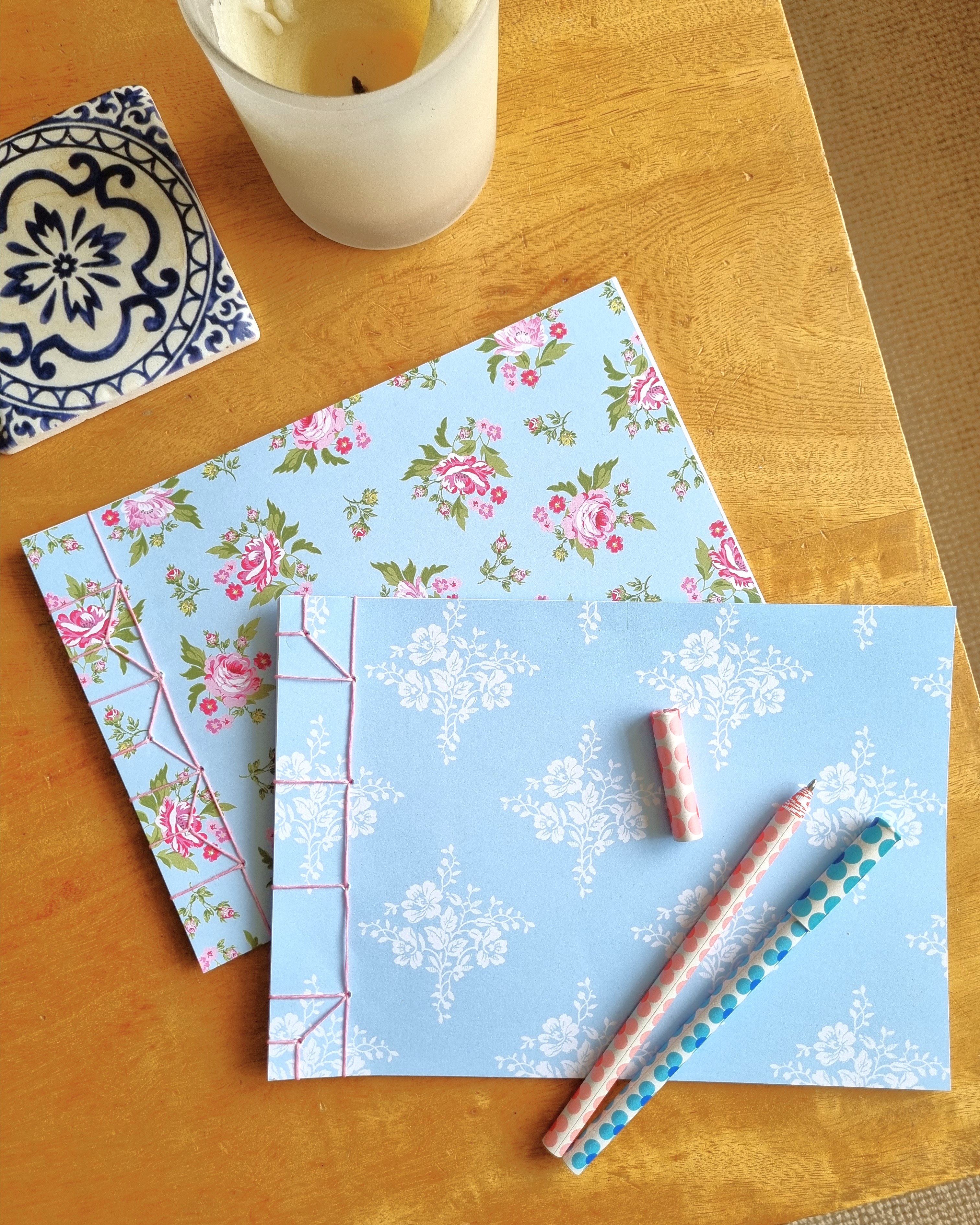
Our Japanese stab binding kit makes two A5 sized books, each with 16 pages. It includes 2 sets of cover pages but you could use your own paper for the covers if you prefer.
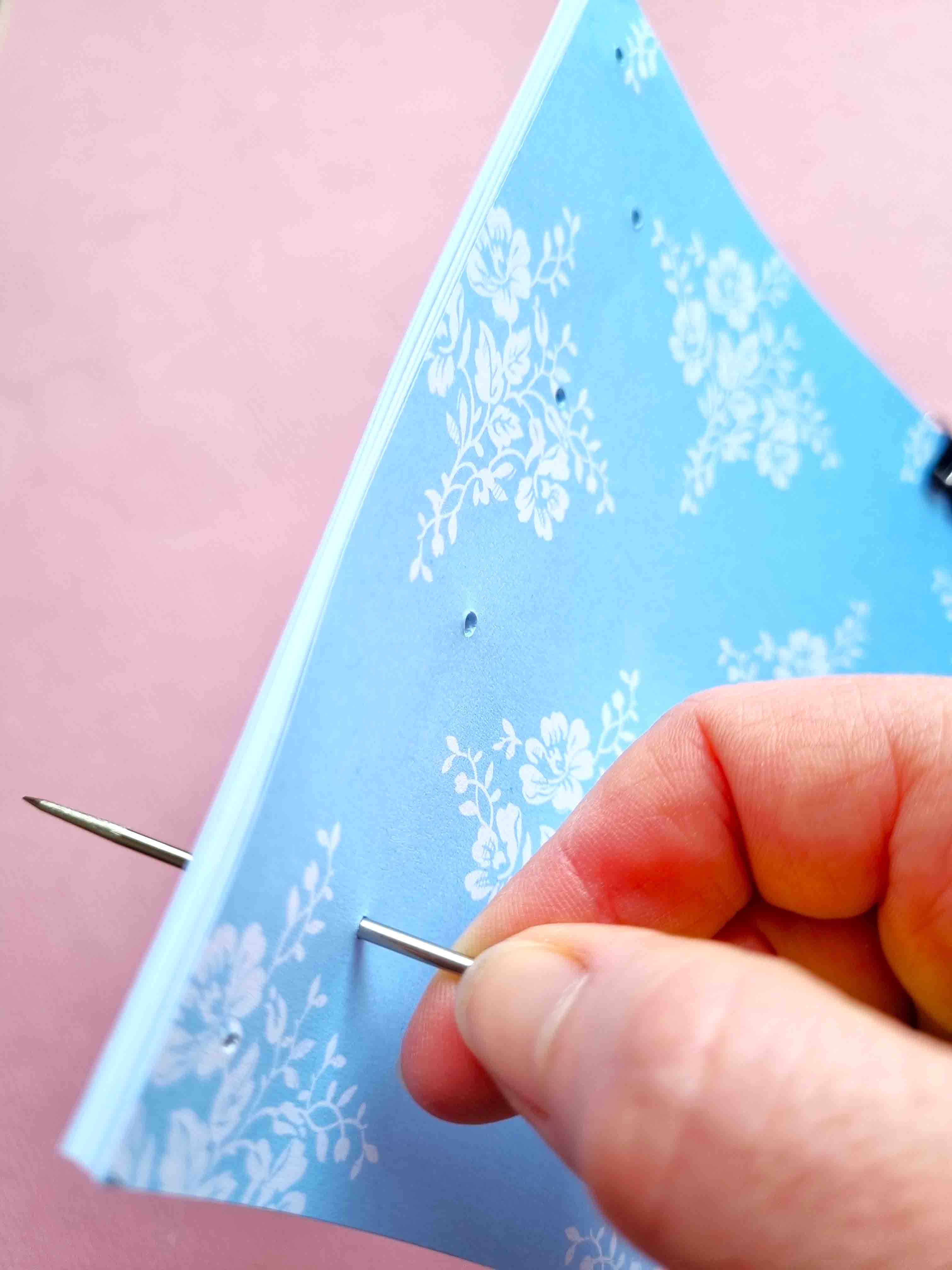
I think the toughest part of doing the kit is making the holes! It does take a bit of effort! When I was making the holes with the awl, I decided that the awl only needed to come out of the back of the book a little way so there was a small hole. Then I lifted the book up and pushed it all the way through (making sure not to poke my fingers!) and this seemed a little easier.
It's important to get the holes in as straight a line as you can manage, but don't worry too much if they're not exactly in the centre of each of the dots on the template. Take care to make sure your pages stay aligned when making the holes, or the edges of your book won't be even.
The other area to take care on is in the stitching. The instructions make sense if you follow them carefully, one at a time. Make sure to pull your thread tight after each step, as I found it difficult (but not impossibly) to adjust at the end when I had a looser section.
Most of all, I hope you enjoy making your books, and maybe you'll use your new found skills to make more books in the future!
If you want to see this kit in action, and get more of my tips from my experience with this kit, watch my video tutorial below!
Next steps
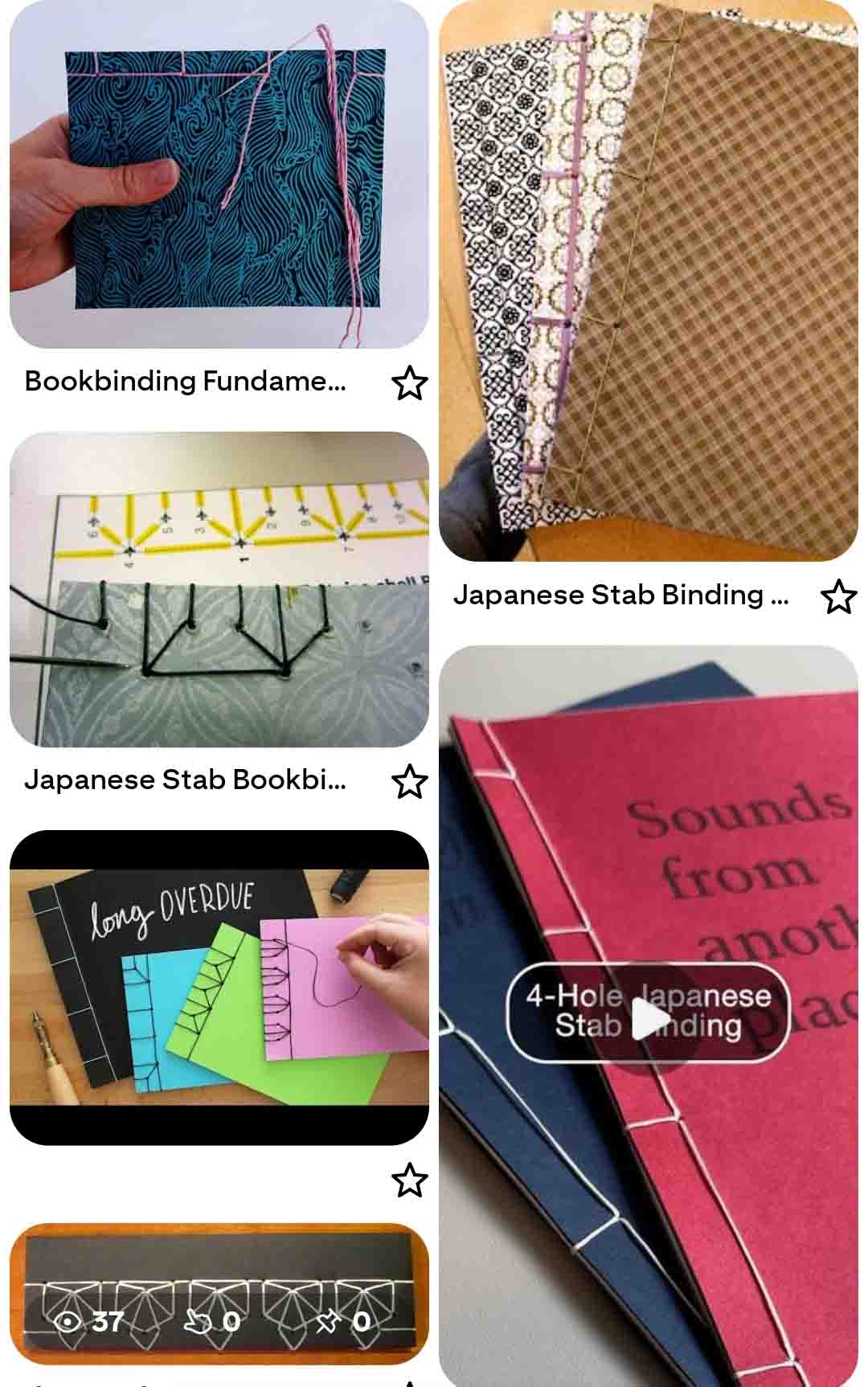
I hope that once you've made your Japanese stab bound notebooks, that you'll want to make more! There are lots of different stitch designs you can use, and I've pinned a range of them (along with some tutorials) to my Japanese stab binding Pinterest board (below).
The Becca Making Faces website also has a whole catalogue of them, so you'll never need to do the same one twice!
There are lots of other types of bookbinding too, including coptic binding and long stitch. The Papercraft Panda blog has lots of information about a wide range of bookbinding techniques. I also found this Pinterest board, which has all kinds of bookbinding tutorials. Happy binding!
Craft with us!
Join our twice monthly Craft & Chat nights on the edge of Bath! Bring your own crafts for 2 hours of calm crafting in friendly company.
Find out moreGet crafty joy in your inbox
Get our weekly Cosy Roundup email with inspiring craft news, makers and craft ideas. Plus 10% off your first order!
We will also send you Cosy Craft Club updates from time to time. We will not share your email address with anyone else.